

In partnership with

This week in Five Dink Friday:
🎄 Christmas Court Problems — blame the chimney
🐕 The “Pooping Dog” Stance — why the pros move faster than you
🎯 Aggressive Forehand Rolls — push opponents back with legs + coil
🧠 Holding Your Dinks — deception, patience, and smarter speed-ups
🤓 Useless (But Elite) Pickleball Knowledge — yes, you can go under the net
Let’s get to it!
Banish bad ads for good

Your site, your ad choices.
Don’t let intrusive ads ruin the experience for the audience you've worked hard to build.
With Google AdSense, you can ensure only the ads you want appear on your site, making it the strongest and most compelling option.
Don’t just take our word for it. DIY Eule, one of Germany’s largest sewing content creators says, “With Google AdSense, I can customize the placement, amount, and layout of ads on my site.”
Google AdSense gives you full control to customize exactly where you want ads—and where you don't. Use the powerful controls to designate ad-free zones, ensuring a positive user experience.
#1 🎄Santa Tried… But the Chimney Was the Problem
For anyone who didn’t wake up to a brand-new pickleball court yesterday, I think I’ve identified the issue.

You didn’t have a big enough chimney.
Kidding (mostly).
I hope you had a Merry Christmas filled with good food, good people, and at least some pickleball — even if it was just sneaking out for a hit between family obligations.
As for me? I’m headed into a holiday-themed tournament tomorrow: Dink the Halls at The Picklr, 8am–noon. Four straight hours of pickleball feels exactly right after Christmas chaos.
What are your plans? Hit reply and tell me. I really want to know.
#2 🐕 The “Pooping Dog” Position (Why the Pros Move Faster Than You)
I saw a positioning tip this week that instantly made me realize something uncomfortable:
I do not move like the pros.
And now I can’t unsee it.
The position looks… let’s just say unflattering.
Like a dog mid-business.
And no — I’m not excited to look like that on court.
I am excited about what it does for speed, balance, and power.
Here’s the lightbulb moment:
Bending at the waist = less power, awkward high balls
Bending only at the knees = slow movement, tired legs
Getting low with hips pushed slightly forward = 👀 everything changes
That third option is what the pros are doing.
Once you see it, you’ll start noticing it when you watch them play.
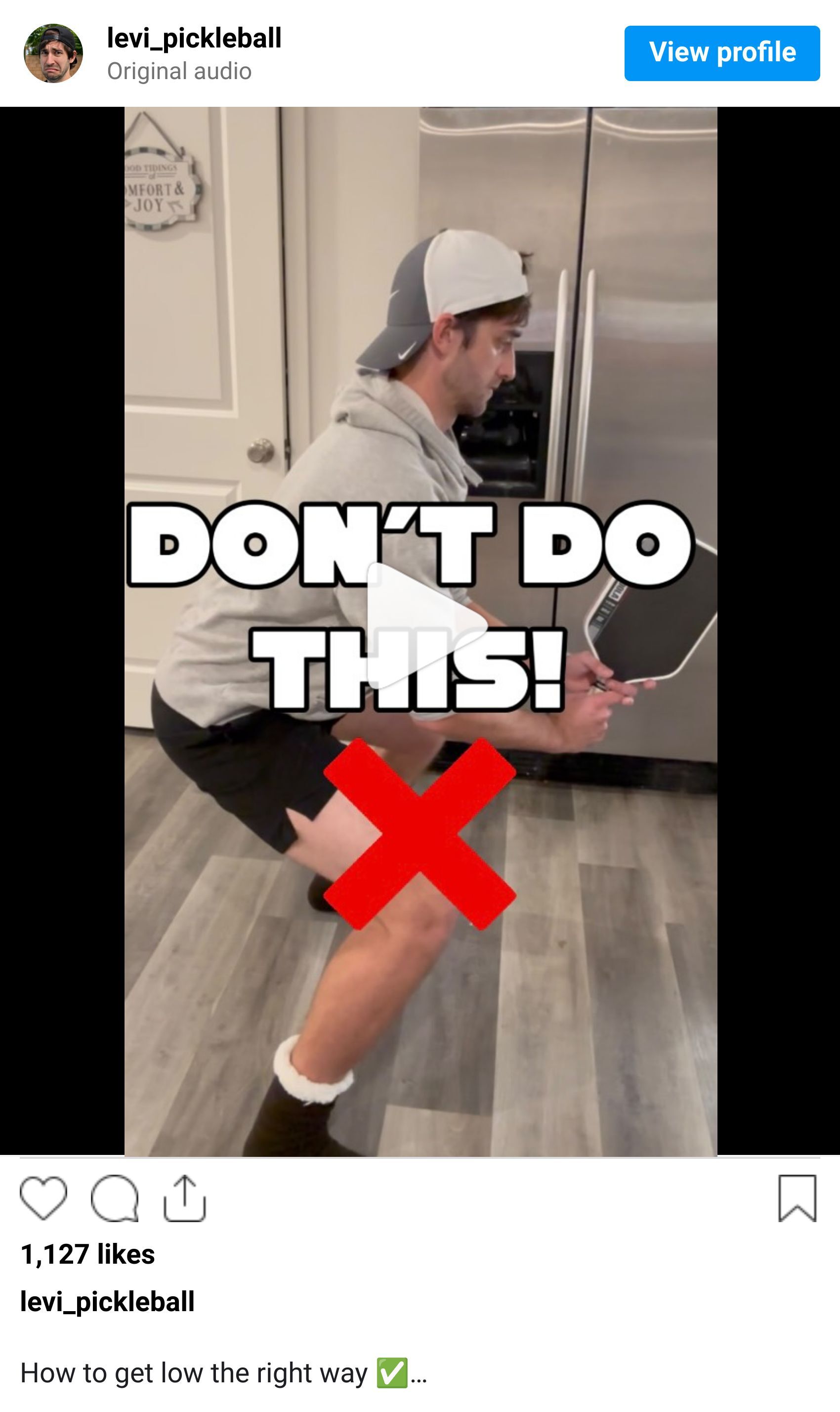
They’re low, athletic, hips engaged — not squatting, not folded over — just ready to explode in any direction.
And because there’s so much bad advice floating around, the clip I found shows the best proof possible:
Ben Johns doing exactly this.
I’m absolutely trying this immediately.
Watch the clip.
Adopt the stance.
Embrace your inner pooping dog (for performance reasons only).
#3 🏓 Aggressive Forehand Rolls (The Missing Power Piece)
I found a great reel on how to hit aggressive forehand roll shots — here’s the tip that clicked for me:
It’s not about swinging harder.
It’s about where the power comes from…
…loading and coiling through the legs, then sending momentum forward and across the body — not just an upward brush with the arm.
That explanation, coupled with the visual, was money. Here’s the clip so you can see it too:
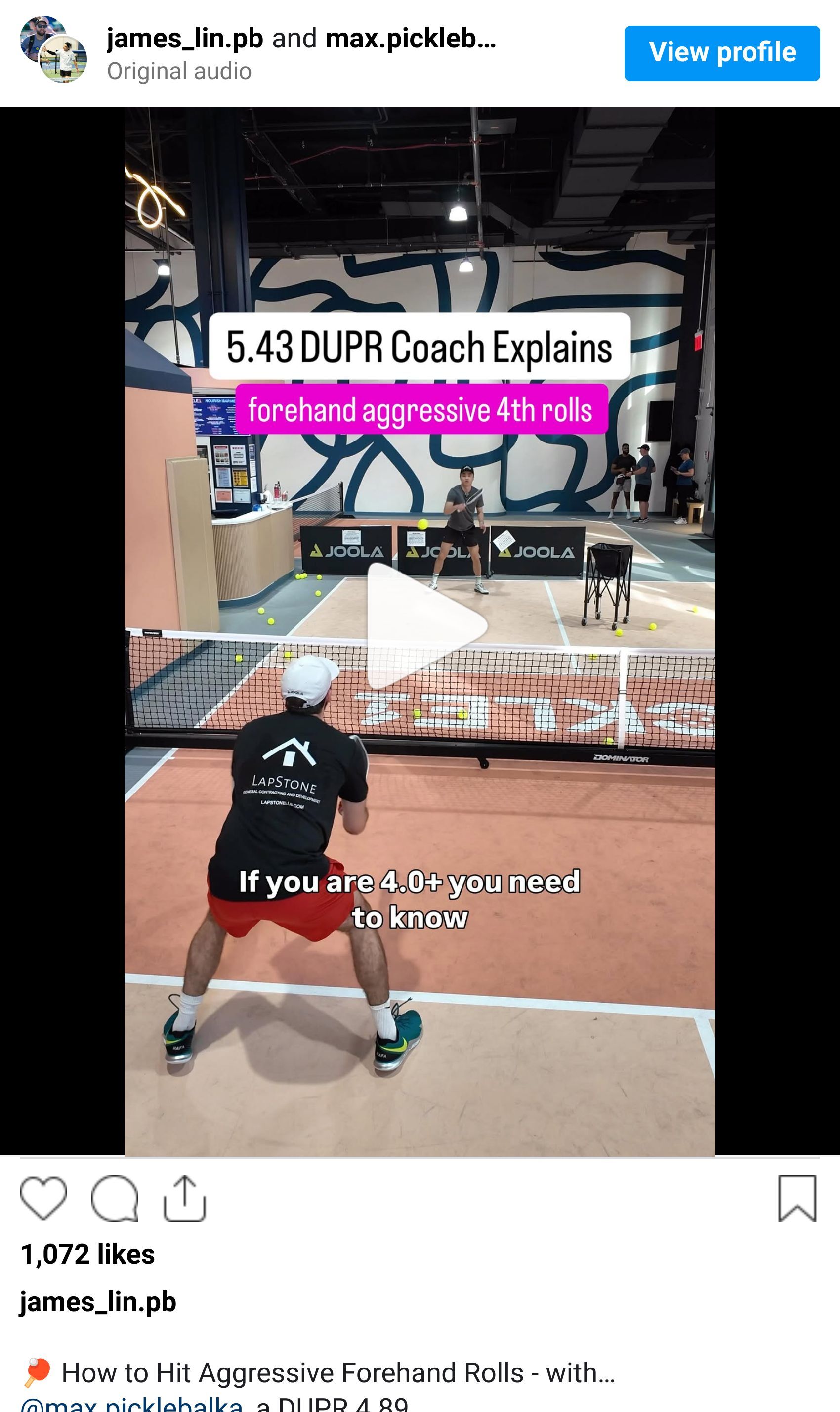
And here’s your quick implementation checklist:
Load your legs and coil first
Drive your momentum forward and slightly across your body (not straight up)
Keep the arm relaxed until contact
Brush for topspin, but don’t rely on elbow-only power
Avoid contact that’s too high, or your paddle face opens, and the ball floats
The biggest takeaway:
👉 If you only brush up, the ball doesn’t go forward enough and will be weak.
By using your legs to push momentum through the ball while still brushing for spin, you get a roll that actually pushes opponents back.
I’m excited to coil and load with my legs on both my backhand and forehand rolls. Here’s to a more aggressive 4th shot.
#4 ⚡ 🧠 Holding Your Dinks (AKA: Becoming a Puppet Master at the Kitchen)
I found a great video on holding your dinks, and yes — I know, we’ve talked about this concept before.
But this one really clicked for me.
I’ve been intentionally trying to add more deception to my game lately—
head fakes, delayed contact, and making people guess.
Holding your dinks is a huge part of that.
What I loved about this tutorial is how simply he explained when to speed up — not just how.
The big aha for me:
👉 Watch your opponent’s body.
If your opponent is:
leaning in
reaching
extending their paddle early
That is the perfect moment to speed up the ball.
I get frustrated when I play with an impatient partner who tries to speed everything up — low balls, off-balance balls, rushed balls — and before they even make contact, I already know it’s going into the net or way out of bounds. Like… I can predict it with 100% accuracy, and it takes everything in me not to yell “NO” as they wind up for the ill-advised speed-up. 😅
This video explains why.
You should only speed up when you’re advantaged.
I loved how he talks about “data collection” — hitting a couple of aggressive dinks, holding the ball, watching how the opponent reacts… and then waiting for them to cheat.
Once they lean in?
Once the paddle reaches?
BAM. Speed up.
They’re forward. Paddle extended.
Now you put it in the right spot and force them to:
stand up, reset their paddle, and counter late.
That’s not gambling.
That’s smart pickleball.
Watch the tutorial — it’s excellent.
And I’m absolutely drilling this.
#5 🤓 Useless Pickleball Knowledge (That Somehow Makes You Cooler)
I don’t know why I spent two minutes watching this Instagram reel…
but here we are.
I think it’s because I love Jeopardy, useless trivia, and knowing obscure rules that will probably never help me — but still make me feel smarter than most people on the court.
So here’s your new favorite “did you know”:
If your opponent hits a ball with enough spin that it bounces on your side and comes back over the net, you’re allowed to play it.
Yes — that can mean sliding your paddle under the net to save it.
Rules (aka how to not get yelled at):
Don’t touch the net
Don’t touch the opponent’s court
You don’t even have to “hit” the ball — it can just bounce off your paddle
For normal humans (not PPA pros), you must wait for the ball to break the plane of the net
Will you ever use this in a real match?
Almost definitely not.
But just knowing it?
Elite energy.
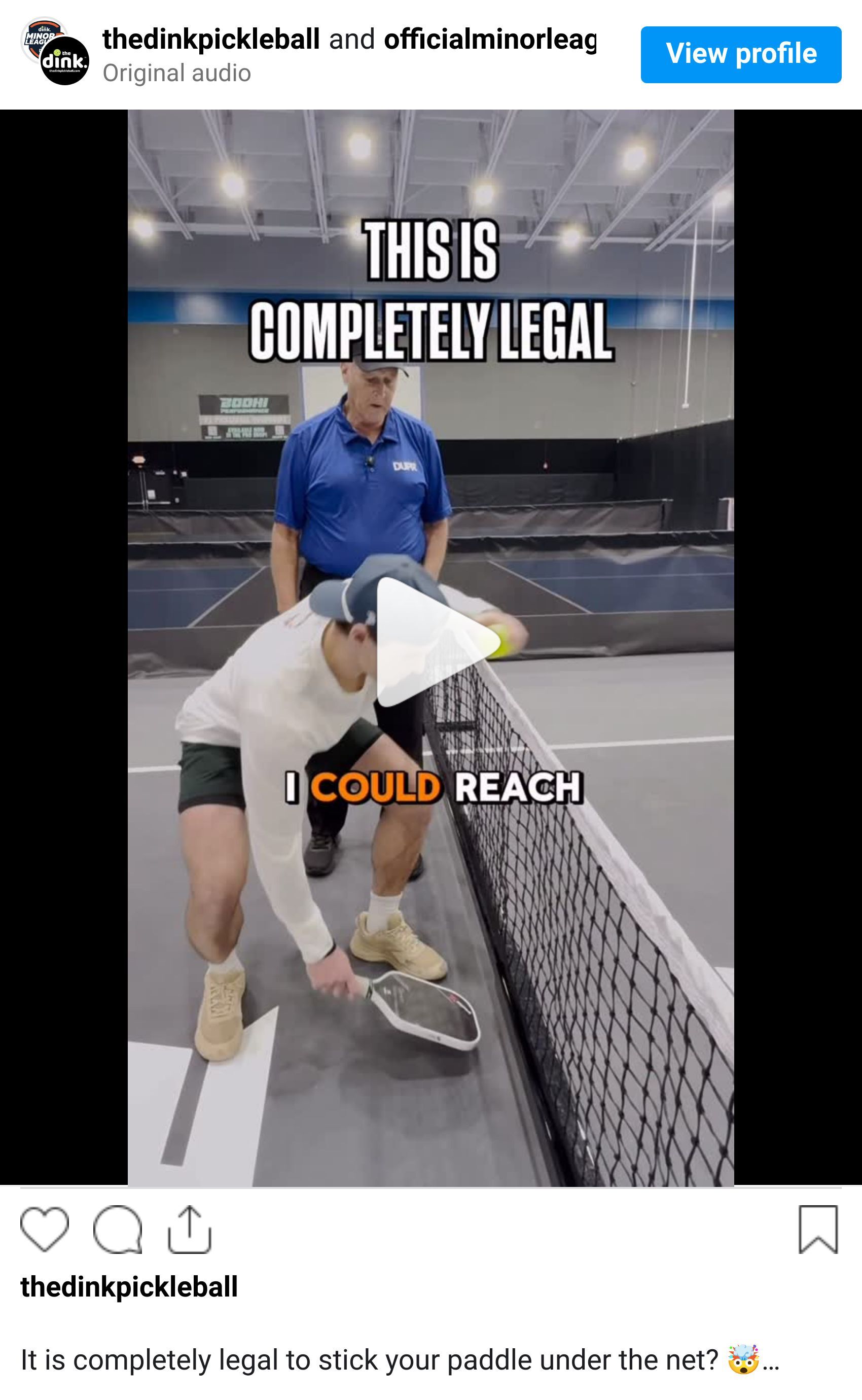
And honestly… the comments are the real reason to watch the reel:
“Just play tennis.”
“If you can’t tell the ball is coming back, you’re not capable of this anyway.”
“This just broke my brain.”
Absolutely unhinged. 10/10 entertainment.
Go watch the reel.
Absorb the trivia.
Casually drop it in conversation later.
You can thank me when you feel superior for no practical reason at all. 🏓😌
💥 That’s a wrap for this week’s Five Dink Friday!
If this had you rethinking your stance, holding your dinks a beat longer, or casually dropping under-the-net trivia at open play, forward this to a partner who appreciates both strategy and spice.
If this landed in your inbox via a friend, hit subscribe so you don’t miss next week’s drop.
Until next week…
may your rolls be heavy, your dinks deceptive, and your holiday pickleball schedule remain wildly overbooked.
—Janelle 🎄🏓
P.S. With New Year’s Eve around the corner, consider this your gentle reminder to start planning your 2026 resolutions.
If one of them isn’t “play more pickleball,” we should probably talk.
And if you already play daily… maybe 2026 is the year you finally drill on purpose. 😉